Meta-Analysis Academy

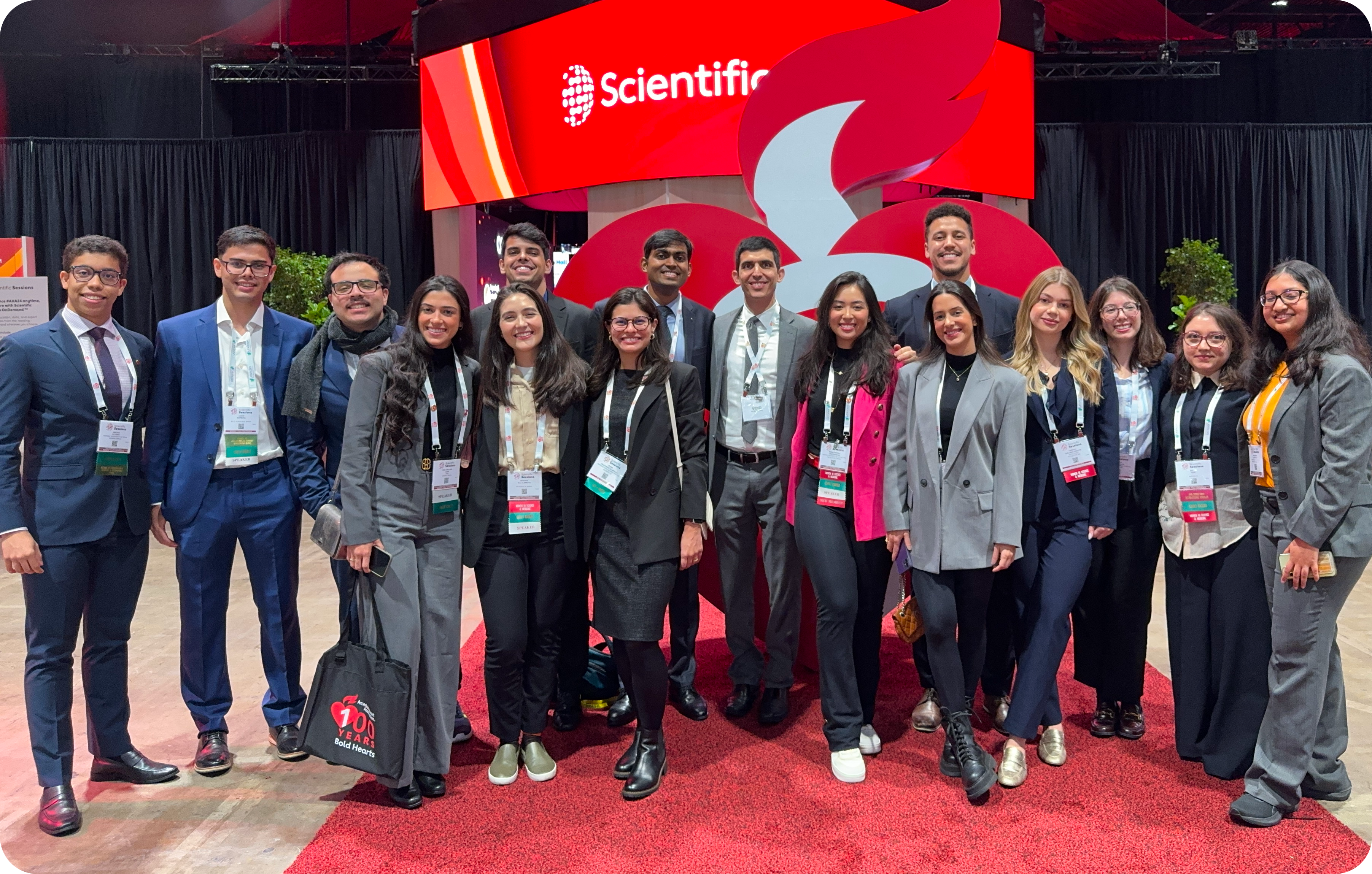
This is what being a
#metamaster looks like

Impactful Papers, Impactful Careers

Most Influential
Publications

Perioperative Use of Tranexamic Acid in General Surgery — JAMA Surgery EEG-Guided Anesthesia for the Prevention of Emergence Delirium in Children — JAMA Pediatrics Reevaluating Nonoperative Management for Pediatric Uncomplicated Acute Appendicitis — JAMA Pediatrics Short-Term Dual Antiplatelet Therapy After Drug-Eluting Stenting — JAMA Cardiology Prophylactic strategies for prevention of postpartum haemorrhage — Lancet Global Health IVUS, OCT, or Angiography as Guidance for PCI — JACC Cardiovascular Interventions Video versus direct laryngoscopy in critically ill patients — Critical Care COVID-19 outcomes in patients with sickle cell disease — eClinicalMedicine Trastuzumab deruxtecan in HER2-positive breast cancer brain metastases — ESMO Open Use of Antibacterial Envelopes in Neuromodulation Surgeries — Neurosurgery Intravenous lidocaine with propofol-based sedation for colonoscopy — Anaesthesia Ocular Manifestations and OCT Findings in Dengue — Ophthalmology

0+ countries reached

teaching students to publish high-impact articles independently.

0+ participations in
congresses.
0+ participations in
publications.
Meta-Analysis Academy students

Publications From
All Over The World

Brazil publication Angola publication Bulgaria publication Colombia publication Costa Rica publication Ecuador publication Egypt publication El Salvador publication Mozambique publication India publication Italy publication Israel publication Kuwait publication Nigeria publication Mexico publication Luxembourg publication Poland publication Pakistan publication Panama publication Peru publication Philippines publication Romania publication United Arab Emirates publication Türkiye publication Sao Tome and Principe publication Chile publication Hungary publication

Inspiring Stories

Denilsa Navalha

Denilsa Navalha

Denilsa started with no research experience and without a structured international trajectory. Like many physicians in training, she carried the uncertainty of not knowing exactly how to stand out in highly competitive processes outside her home country.

Along the way, she built her skills from the ground up, learning to lead projects, organize teams, and turn ideas into tangible results, including a publication in International Urology and Nephrology.

Her academic growth, combined with the skills she developed throughout the process, became a decisive step toward a historic Match in Internal Medicine at the University of Nebraska. The first physician from Mozambique to achieve this position. Building an academic profile marked by leadership and autonomy opened the doors to an opportunity that will remain part of history.

Talita Trevisan

Talita Trevisan

Talita was already a specialist when she began to feel discomfort that was hard to explain. She worked, saw patients, studied... but had the sense she was always going in circles.

Publishing more was not the goal. She wanted relevance. She wanted to produce something that truly carried weight. As she began directing her research toward strategic topics, her trajectory started to change. Then came a defining moment: seeing her work serve as the basis for clinical recommendations from the American Diabetes Association.

For someone who came from a small town in southern Brazil, it meant more than an academic achievement. It was proof that it was possible to reach the places where decisions are made.

Pedro Bregion

Pedro Bregion

Pedro joined the Meta-Analysis Academy in his second year of medical school at the State University of Campinas. Even at an institution that strongly encourages research, he was looking for a way to stand out and generate meaningful results early on.

Without prior experience, he felt the need to find a clear direction for his projects. Learning meta-analysis became the path to turning interest into concrete outcomes.

In less than a year, he achieved 12 accepted conference abstracts, two publications, and the Travel Grant Award (USD 1,675) at Obesity Week 2024, all while still in his third year of medical school.

Pedro Henrique Costa

Pedro Henrique Costa

Pedro Henrique Costa began his academic journey in traditional research, facing common limitations: time, resources, and dependence on larger teams.

After transitioning to meta-analysis–based projects, he started developing studies with greater autonomy and reach. One of these works was accepted at the FIGO congress and became the prerequisite for applying to the FIGO Chien-Tien Hsu Fellowship 2025, which he ultimately earned, along with a $5,000 travel grant.

In his words: "Being selected for FIGO and the Chien-Tien Hsu Fellowship is a great honor and a unique opportunity to strengthen gynecologic oncology care in my country."

Rafael Ayala

Rafael Ayala

He joined the program while working as a cardiac surgery resident in Germany, balancing one of the most demanding training routines in medicine to build a high-level academic profile.

He led a meta-analysis published in the Journal of Cardiothoracic and Vascular Anesthesia, later cited in the EACTS/EACTA/EBCP guidelines on cardiopulmonary bypass in adult cardiac surgery.

Rafael is an example that being present in international guidelines, helping support clinical decisions around the world, is not something distant or reserved for a few. It is a possible path when you learn to conduct high-impact research with autonomy.

Cintia Gomes

Cintia Gomes

High-level publications and meta-analyses are decisive in strengthening your academic profile in competitive selection processes. They demonstrate consistency and leadership.

Cintia Gomes, currently an Internal Medicine resident at UCHealth Parkview Medical Center, experienced this firsthand during her journey toward the Match in the United States.

In the year she did not match, she received only two interviews. After learning meta-analysis and strengthening her CV with publications in journals such as the American Journal of Obstetrics & Gynecology, that number jumped to eight interviews in her next attempt. This time, she achieved her goal.

More than numbers, the publications brought visibility, credibility, and opened doors that once seemed distant. In competitive scenarios, where every detail counts, meta-analyses can become the key differentiator that turns your dream into reality.

Paweł Łajczak

Paweł Łajczak

He joined the program in his third year of medical school at the Medical University of Silesia in Poland, interested in research but without a clear structure on how to begin.

"I honestly didn't even know what PICO was. And I was afraid. I kept wondering if I would really be able to come up with good ideas by the end of medical school."

At that moment, there was uncertainty, with basic concepts still unfamiliar and doubts about his ability to turn questions into meaningful projects. Over time, he built a strong methodological foundation and autonomy, participating in and leading multiple systematic reviews and meta-analyses, which resulted in a solid and consistent scientific portfolio.

His achievements earned him national recognition: he was awarded by the Polish Ministry of Health as one of the 50 best medical students in the country, based on his academic accomplishments and scientific output.

Ana Carolina Cintra

Ana Carolina Cintra

Ana Carolina Cintra, a fourth-year medical student, was part of a project that, at first, faced what many research groups know well: repeated rejections, including from lower-impact factor journals. Instead of ending the process, the team chose to step back and rethink the work more deeply.

The study was completely restructured. New analyses were conducted, the manuscript was rewritten, and the group sought guidance at the right time. A partnership with Expert Isabella Faria, a general surgery resident at the University of Texas Medical Branch, brought the refinement the project needed to reach a new level.

The result was acceptance in JAMA Pediatrics, one of the most influential journals in the field, with strong potential to impact future clinical guidelines.

The entire process reinforced a clear lesson for everyone involved: persistence, organization, and strategy can completely change the destiny of a project and take an idea born among students to one of the world's leading journals.

Natalia Arturo

Natalia Arturo

The career of your dreams may be closer than it seems.

Natalia Arturo is a physician trained in Colombia and now a neurology resident at the University of Miami. As an IMG, she knew she would need a real differentiator to compete in one of the most demanding selection processes in the world. She found that path through learning high-impact research.

Throughout her journey, she developed strategic meta-analyses, presented her studies at the International Stroke Conference, and led a publication in the Journal of Stroke & Cerebrovascular Diseases.

These milestones were not just isolated academic achievements. They were decisive steps in strengthening her profile, gaining visibility, and building a competitive CV.

Each presentation, each publication, and each well-executed project shortened the distance between where she was and where she wanted to be.

Bezalel Hakkeem

Bezalel Hakkeem

A resident physician at Government Medical College Kozhikode in India, Bezalel began his academic journey far from the major international research hubs, often seen as the only path to scientific recognition.

"Training outside major academic centers can make it feel like opportunities are always farther away."

His trajectory began to gain international recognition after receiving the Reach the World Travel Award (USD 2,000) from the International Society on Thrombosis and presenting his work at the 2025 European Society of Cardiology Congress in Madrid, reinforcing that global recognition can be built even outside traditional research centers.

U.S. Residency Matches

Student match
Student match
Student match
Student match
Student match
Student match
Student match
Student match
Student match
Student match
Student match
Student match
Student match
Student match
Student match

Impact Across All
Medical Specialties

Your impact can be extraordinary.

No matter your specialty or area of interest, high-impact research is within reach.

Explore the section below and see how our students use meta-analysis to publish in top-tier journals worldwide.

AI Anesthesiology Cardiac surgery Cardiology Coloproctology Critical care Dentistry Dermatology Endocrinology Gastroenterology General Surgery Genetics Geriatrics Hematology Hepato-Pancreato-Biliary Surgery Infectious Diseases Internal Medicine Neonatology Nephrology Neurology Neurosurgery Nutrition ObGyn Oncology Ophthalmology Orthopedics Pathology Pediatric surgery Pediatrics Physiotherapy Plastic Surgery Psychiatry Pulmonology Radiology Rheumatology Transplantation Urology Vascular Surgery

Impact at Every Stage of
The Medical Journey

Your impact can be extraordinary.

From undergraduates to seasoned professionals, it's never too early or too late to build your academic authority.

Discover how our students at different career stages are achieving global recognition through meta-analysis.

1st year medical student journey
2nd year medical student journey
3rd year medical student journey
4th year medical student journey
5th year medical student journey
Resident journey
Specialist journey
PhD journey

What our students say

Willamy Pedrosa Incoming Internal Medicine Resident
Livia Romariz Medical doctor, future first-year pediatric resident in the USA
Caroline Dagostin Medical Doctor
Isabella Michelon Medical Doctor
Guilherme Franceschini Postdoctoral Research Fellowship in Plastic Surgery
Ana Clara Felix Pharmacy Student
Maria Defante Medical Student

Want to be part of our next class of authors?

Join the waitlist and we'll reach out as soon as applications open.